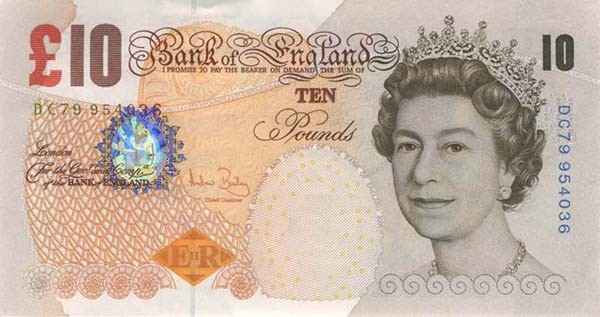
 The pound collapsed
to a 31-year low and there was pandemonium on currency, equity and oil markets
Friday as Britain voted to leave the European Union, fuelling a wave of global
uncertainty.
The pound collapsed
to a 31-year low and there was pandemonium on currency, equity and oil markets
Friday as Britain voted to leave the European Union, fuelling a wave of global
uncertainty.
Sterling crashed 10 percent to $1.3229 at one point, its weakest
level since 1985, while the greenback itself slumped below 100 yen for the
first time in two-and-a-half years as traders fled to safety.
The doomsday scenario
appeared to be playing out as markets suffered one of their worst days since
the 2008 financial crisis after final results confirmed one of the EU’s big
three economies would leave the bloc after four decades.
Fears are also
growing that other EU members will push for referendums, posing the biggest
threat to the future of grouping since its inception almost 60 years ago.
The pound had earlier
topped $1.50 following predictions the “remain” group would win, but as the
Brexit camp posted early victories around the country, traders stampeded to put
in sell orders. In Asian afternoon trade it was at $1.3690.
“Leave’s victory has
delivered one of the biggest market shocks of all time,” said Joe Rundle, head
of trading at ETX Capital. “The reverberations of the vote will be felt around
the world.
“The extent of the
damage on asset prices is hard to gauge but it’s likely to be bigger than
anything since Lehmans at the very least,” he added, referring to the Wall
Street bank whose collapsed precipitated the global financial crisis.
The dollar slumped
briefly to 99.02 yen, the first time it has gone below 100 yen since November
2013, before edging back up above 102 yen. The Japanese unit is considered a
safe bet in times of uncertainty and turmoil.
The Bank of Japan
said Friday it was ready to work with other central banks to pump cash into
financial markets to combat wild swings, while the Bank of England said it
would take “all necessary steps” to avert a full-blown crisis.
Earlier Japan’s
Finance Minister Taro Aso vowed a “firm response” to volatility if necessary.
A flight to safety
also saw higher-yielding and emerging market currencies slump, with the
Australian dollar down 3.4 percent, South Korea’s won diving 2.4 percent and
the Indonesian rupiah shedding 1.7 percent.
Malaysia’s ringgit
was down 2.7 percent, one of its worst days since 1998.
There were also heavy
losses for India’s rupee, the Canadian dollar and the Singapore dollar.
Gold, another safe
investment asset, surged six percent to sit at a two-year high.
As the shock results
rolled in, equity markets went into meltdown, wiping hundreds of billions of
dollars off shares.
Tokyo plunged nearly
eight percent, Sydney shed 3.2 percent and Seoul was 3.1 percent off. Mumbai
lost 3.8 percent and Shanghai sank 1.3 percent, while Taipei, Wellington,
Manila and Jakarta all saw sharp losses.
Hong Kong tumbled 4.4
percent — having lost more than five percent at one point — in the afternoon
with British banking giants HSBC and Standard Chartered both losing about nine
percent. In Pakistan, which relies on exports the Britain, the stock exchanged
dived more than three percent.
In early European
trade London dived eight percent, with banking shares losing 30 percent.
Frankfurt plunged 10 percent and Paris lost eight percent.
And the yields on
German bonds, considered ultra-safe, turned into negative territory, while
British bond yields also tumbled.
“It’s scary, and I’ve
never seen anything like it,” James Butterfill, head of research and
investments at ETF Securities, said in London. “A lot of people were caught
out, and many investors will lose a lot of money,” he told Bloomberg News.

No comments:
Post a Comment